Template: Essential Energy (Typical) dynamic Network Study Requirements (< 5 MVA)

Template version: v4
Country:

AU
Software required:
Source: Typical requirements only
How to add this template to your project
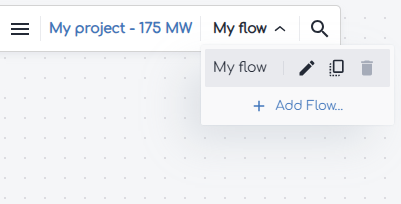
- From within your gridmo project, open the flow dropdown and select 'Add flow'.
- Select the template you want to use and click 'Add to project'.
Background
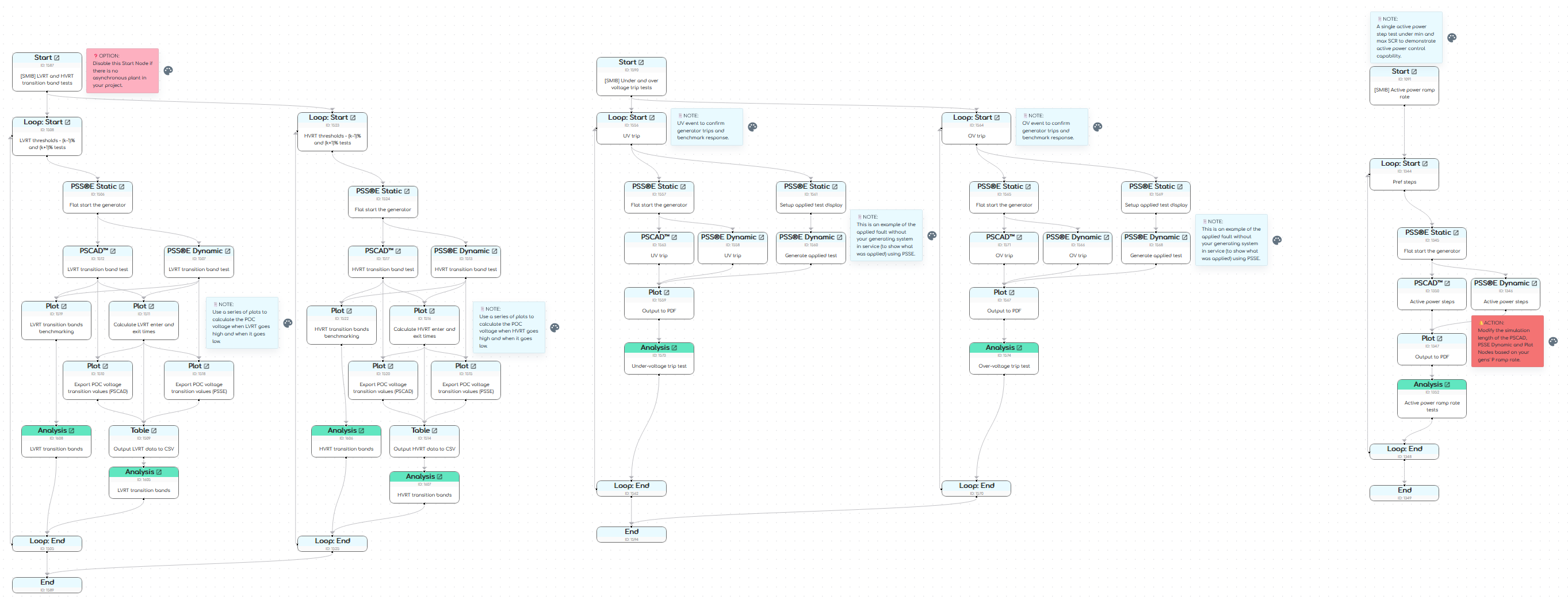
This gridmo template includes a selection of tests to meet the typical dynamic study requirements required to connect to Essential Energy's distribution network under Chapter 5A of the NER.
To our understanding, there are no general guidelines for the power system studies required to be completed to connect a generating system to Essential Energy's distribution network.
This template has been based on requirements specified in project-specific NSR documents provided by gridmo customers.
Reference
Common assumptions
- This template only includes dynamic tests - static tests are not included.
Response to frequency disturbances
The purpose of these tests is to test your generating system's ability to respond to frequency disturbances, including under-frequency and over-frequency disturbances.
- Our template use Automatic Access Standard (AAS) of the Australian NER S5.2.5.3 as we believe compliance with this standard is more common than Minimum Access Standards (MAS). Essential Energy's typical dynamic NSR only reference MAS. If your generating system cannot achieve AAS for frequency disturbances, please touch base with gridmo support.
- It is unclear if both PSS®E and PSCAD™ results are required for this test. The template is configured to run both PSS®E and PSCAD™ studies, however the PSCAD™ simulation is disabled by default.
Response to voltage/fault disturbances
The purpose of these tests is to test your generating system's ability to respond to voltage disturbances.
We have included a single multiple-fault ride-through test with the following faults. If your generating system requires a longer MFRT sequence in order to provide a more stable response, then please increase the spacing of the SIMPLEFAULT commands in the PSCAD™ Node 1547 as required - or alternatively enter a different sequence of faults.
| # | Type | Duration | Fault impedance | Next fault after [sec] |
|---|---|---|---|---|
| 1 | 1PHG | 220 ms | 0 (bolted) | 0.2 sec |
| 2 | PH-PH | 430 ms | 0 (bolted) | 5 sec |
| 3 | 1PHG | 500 ms | 70% residual | 30 sec |
| 4 | 2PHG | 220 ms | 60% residual | 30 sec |
| 5 | 1PHG | 430 ms | 60% residual | 30 sec |
| 6 | 1PHG | 220 ms | 0 (bolted) | N/A |
- We have assumed that all faults in this section should be completed in PSCAD™ only, as all faults in the typical faults table are unbalanced faults.
- A footer in some NSR documents note that the tests under maximum SCR can be omitted if the minimum SCR fault tests show acceptable performance. For completeness, we have included both min and max SCR tests - you can disable the extra loop rows in the
Loop StartNode1531if desired.
Active power ramp rate
The purpose of this test is to test your generator's active power control capability.
- You may need to modify the step time and simulation length of all Nodes connected to Start Node
1091based on your generating system's active power ramp rate.
Revision history
Version 4 | 28 November 2025
- Added Action Nodes.
- LVRT and HVRT transition band tests: Corrected internode variable name for
i_poc_v_when_into_lvrttoVpoc - LVRT enterin Table Node1509to match the associated Analysis Node1605. - LVRT and HVRT transition band tests: Corrected typos in Analysis Node
1607"Name" and "Description" columns which were referencing LVRT transition bands requirements instead of HVRT - corrected to HVRT requirements. - P(f) droop curve: Added OUTPUT command in Plot Node
1466to output change in active power in p.u.i_ppoc_pu_difffor Table Node1473. - Response to faults: Added OUTPUT command in PSCAD Node
1533for Idpoc which was missing in Plot Node1535.
Version 3 (v1.4.20) | 25 November 2024
- S5.2.5.5 FRT transition bands: Split the Plot Nodes which were calculating the LVRT and HVRT enter/exit times so that there is one per power systems software (i.e. PSS®E and PSCAD™). There was an error where the LVRT and HVRT enter/exit times were only calculated in PSCAD™ and these values were used to output the Vpoc values for both PSS®E and PSCAD™.
Version 2 (v1.4.12) | 15 April 2024
- Updated to align with newest template Sticky Note format.
Version 1 (v1.4.11) | 20 March 2024
- First version released.