Template: AusNet Services 1.5MW to 5MW Dynamic System Study Requirements (SSR)

Template version: v2
Country:

AU
Software required:
PSS®E
PSCAD™
Source: v1.0 (09 May 2023)
How to add this template to your project
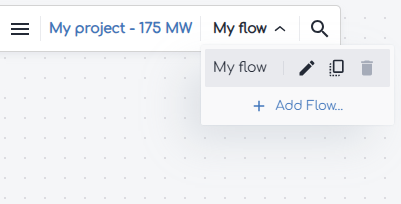
- From within your gridmo project, open the flow dropdown and select 'Add flow'.
- Select the template you want to use and click 'Add to project'.
This gridmo template:
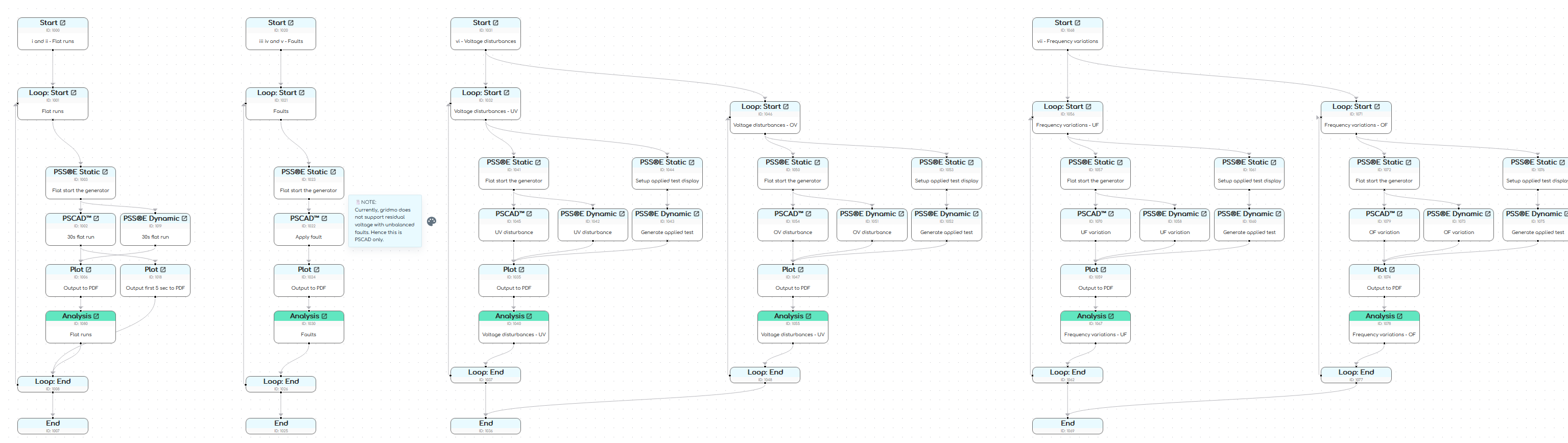
- Includes tests required as per the "Dynamic studies" section of the AusNet Services | System Study Requirements 1.5 - 5 MW| May 2023
Configuration
To use this template:
- Configure your global and scenario variables by using gridmo's Model setup template.
- Download this template using the download button above and load the template into the gridmo web-app.
- Transfer your general tab data, global variables and scenario variables across using the 'Import' buttons in the gridmo web-app.
Assumptions
- This template currently only includes the tests listed under the section "Dynamic studies" and is configured for asynchronous generating systems.
- PSCAD™ The template enables the PSCAD™ Nodes by default, assuming that PSCAD™ studies are required because "system strength limitations...are identified".
- Section (i) & (ii) Flat runs:
- We have assumed that a 30 second simulation is sufficiently long to demonstrate flat run stability.
- Section (vi) Voltage disturbances:
- Infinite inertia is used for these tests, which may not be applicable for grid-forming inverter systems.
- The voltage waveforms applies have been configured such that the time spent within that range includes any time spent in the more onerous ranges.
- Section (vii) Frequency variations:
- Tests are conducted using a playback generator with infinite inertia.
- Network frequency dependency has been turned off.
Sources
- AEMC | National Electricity Rules | Version 200 | 30 May 2023
- AEMO | Power System Model Guidelines | Version 2 | July 2023
- AEMO | Guide to generator exemptions and classification of generating units | Version 5.4 | August 2022
- AusNet Services | System Study Requirements | May 2023
Revision history
Version 2 (v1.4.12) | 15 April 2024
- Updated to align with newest template Sticky Note format.
- Slight changes to the
StartNodes in the template to makeAnalysisNode outputs easier to read.
Version 1 (v1.4.6) | 5 December 2023
- First version released.